ADHD
ADHD Sensory Boxes Explained: What to Look For (and What to Skip)
By Brooklyn Banjoko · 7 October 2026 · 8 min read
The most useful ADHD sensory box isn’t the one with the most items. Here’s what to look for, what to skip, and how to choose thoughtful over full.
Choosing a box that feels thoughtful, not random
Choosing an ADHD sensory box can feel exciting, and a little overwhelming. There are so many fidgets, toys, books and “calm-down” products available — but the most useful box is not necessarily the one with the most items.
The right box should help your child feel recognised, engaged and supported, and give you practical ideas for using the products at home, at nursery or in a classroom.
What is an ADHD sensory box?
An ADHD sensory box is a carefully selected collection of books, sensory tools and activities designed to support a child’s individual ways of playing, focusing, moving and engaging with the world.
It is not a treatment. It is not a reward for sitting still. And it is not about changing who your child is. Instead, it can offer:
- ✓Something to keep hands busy during storytime or listening.
- ✓A sensory tool for movement, touch or focus.
- ✓A familiar activity during transitions.
- ✓A book that helps your child see themselves positively.
- ✓Simple ideas for parents, carers and educators to try together.
Does it help autistic children too?
A good box may also support autistic children, which is why families often search for a sensory box for autism or sensory toys for autistic children. ADHD and autism are different experiences, but many children benefit from carefully chosen sensory tools, inclusive stories and predictable activities.
The key is not the label on the box. The key is whether the contents are genuinely useful for your child.
ADHD sensory box or generic toy subscription?
A standard toy subscription may send a new novelty item every month. That can be fun, but novelty alone does not always create lasting value. A thoughtful ADHD sensory box should go further:
- ✓Chosen for engagement, regulation and focus — not just novelty.
- ✓A clear purpose for each item, rather than unrelated toys.
- ✓Carefully matched to the child’s age, not a broad age range.
- ✓Practical ideas for parents and carers, not just products.
- ✓Books with representation and neurodivergent characters.
- ✓A useful collection built over time, rather than clutter.
1. Positive representation in the books
Your child deserves to be the hero of the story. Look for neurodivergent children’s books that show ADHD, autism and sensory differences with warmth and respect. Characters should have personalities, ideas, feelings and strengths — their differences should not be presented as something shameful that needs fixing.
A good story can help your child say: “That character is like me.” It can also help siblings, classmates and adults understand different ways of thinking and communicating.
2. Sensory toys chosen for a reason
A box does not need to contain ten different plastic toys. The best sensory tools are selected with purpose. They may support:
- ✓Quiet hand movement.
- ✓Touch and texture exploration.
- ✓Focus during a short activity.
- ✓Movement breaks.
- ✓Sensory seeking.
- ✓Calm, rhythmic play.
- ✓Independent play and choice-making.
There is no single “perfect” sensory toy
One child may love a pop-it. Another may prefer a stretchy fidget, a textured object or a simple activity with a clear beginning and end. Look for variety, quality and opportunities for your child to choose what feels right.
3. Activity guides that make everything usable
Parents and carers should not have to guess how to introduce a toy, when to offer it or what to try next. Useful guides might suggest:
- ✓A five-minute story-and-fidget routine.
- ✓A movement break before a seated activity.
- ✓A simple way to explore a book’s theme.
- ✓Questions to support communication.
- ✓Ideas for using the same tool at home or in a setting.
4. A clear age range
For younger children, age guidance is essential. The Inclusive Explorer Standard Box is designed for children aged 0–7, with products chosen for little learners.
Always follow the safety information supplied with each product. Young children should be supervised with sensory toys, especially where small parts may be involved.
5. Quality and safety information
Before ordering, check whether the company gives clear information about:
- ✓Recommended ages.
- ✓Materials and product details.
- ✓How each toy is intended to be used.
- ✓Supervision requirements.
- ✓Delivery and returns.
- ✓Customer support.
6. A flexible subscription
Family life changes. Your child’s interests change. Budgets change. Look for a subscription that lets you cancel at any time, with clear billing: you should know the monthly price, delivery cost and when payments are taken.
What to skip: sensory box red flags
Your child does not need to earn access to sensory support. Sensory tools should be offered respectfully, as one option among many — never used as a punishment.
- ✓Random plastic toys with no clear purpose.
- ✓Products not matched to the advertised age range.
- ✓No information for parents or carers.
- ✓Generic books with little or no neurodivergent representation.
- ✓Too many noisy or visually busy items at once.
- ✓Unclear safety guidance.
- ✓Hidden delivery charges.
- ✓A rigid contract you can’t leave.
- ✓Claims that a toy will “fix” ADHD or eliminate sensory differences.
How the Inclusive Explorer Standard Box fits the checklist
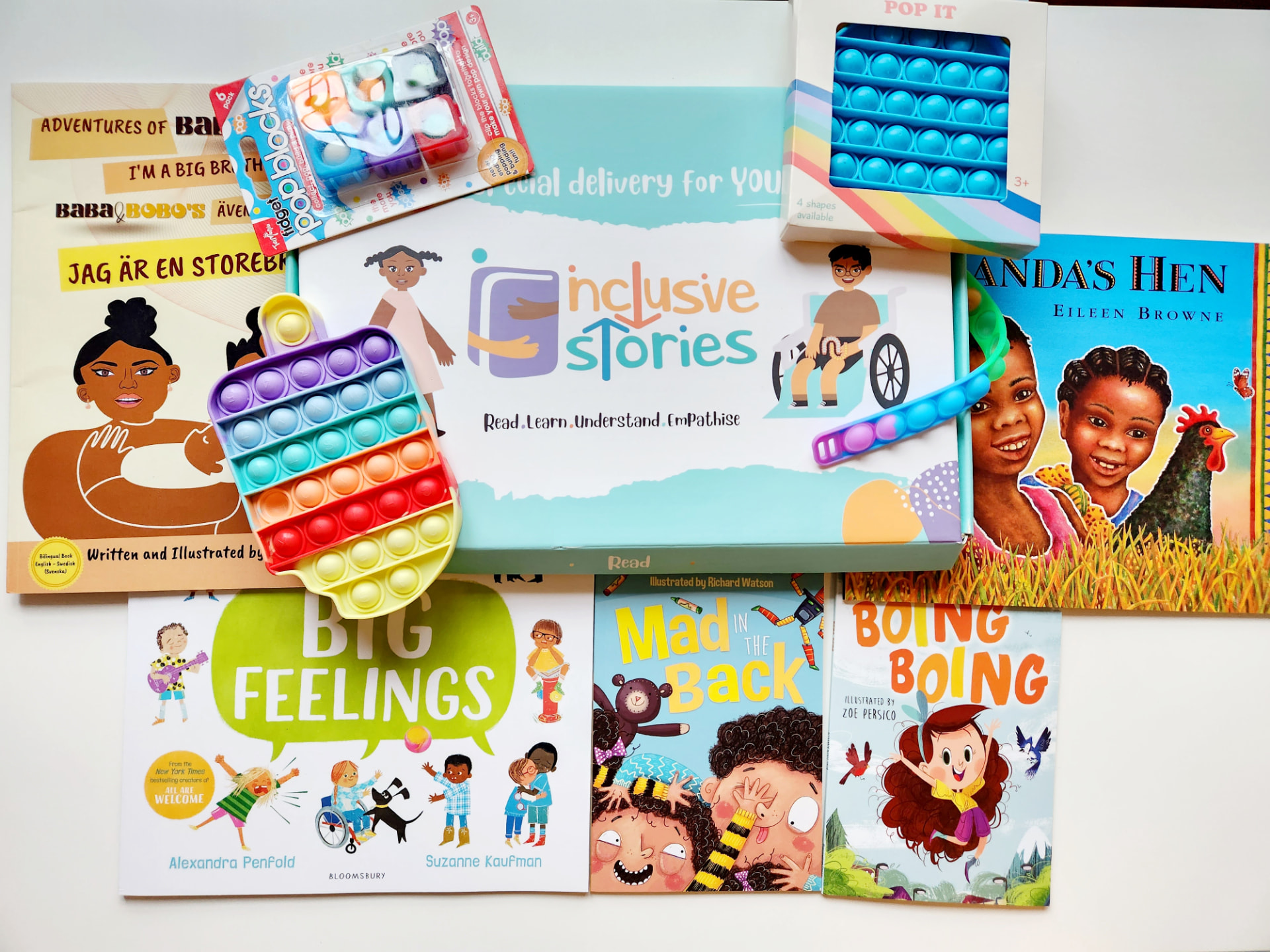
Our most popular box brings representation, sensory play and practical support together in one monthly delivery, designed for ages 0–7. Every box includes:
- ✓3 inclusive picture books featuring neurodivergent characters.
- ✓3 sensory fidget toys selected for young learners.
- ✓3 activity guides with practical tips for parents and carers.
Characters children can recognise
The Inclusive Sensory Squad adds another layer of representation. Each character reminds children that they are enough exactly as they are:
- ✓Fidgety Flo — ADHD.
- ✓Blanket Benji — sensory differences.
- ✓Chewy Charlie — oral sensory needs.
- ✓Quiet Quinn — selective mutism.
- ✓Bouncy Bella — sensory seeking.
Clear pricing and flexible terms
- ✓Box price: £28.99 per month.
- ✓UK delivery: £3.99 per box shipment, charged with each monthly payment.
- ✓Billed monthly — cancel any time from your account.
- ✓Not sure which box suits you? The free two-minute Box Finder gives you a starting point.
A smaller starting point for ADHD support
If you’d prefer a single story and sensory tool rather than a monthly box, the Fidgety Flo book and fidget bundle is a gentle place to begin. You can also browse the ADHD shop collection, printable SEND resources and digital downloads, or our other ADHD support articles.
For schools, nurseries and therapists
A sensory box can also be a valuable resource for a classroom, therapy space, nursery or specialist setting. Inclusive resources can help you:
- ✓Build a small sensory toolkit.
- ✓Offer meaningful book choices.
- ✓Support group storytime.
- ✓Create predictable activity routines.
- ✓Give children appropriate opportunities for movement and focus.
- ✓Introduce positive conversations about ADHD and neurodiversity.
The simple answer: choose thoughtful over full
The best ADHD sensory box is not the biggest one. Choose one that offers representation, purposeful sensory tools, age-appropriate products, clear guidance, safe quality items, flexible terms and support for the adults using it.
Most importantly, choose resources that help your child feel welcomed, understood and confident to explore the world in their own way.